Table of Contents
ToggleSomewhere between “I can see every fine line” and “I’m not ready for surgery,” a lot of people find themselves in a strange skincare limbo. You’ve tried the serums, the retinols, the fancy facial tools that promise the moon — and while some of it works, nothing quite delivers that noticeable lift you’re after. That’s exactly the gap Sofwave was designed to fill.
If you’ve been hearing the name pop up at your dermatologist’s office, in beauty forums, or from that one friend who always seems to find the next big thing in aesthetics — you’re not imagining it. Sofwave has become one of the more talked-about non-invasive skin treatments in recent years, and for good reason. But what actually is it? How does it work? And more importantly, is it worth your time and money?
Let’s get into it.
What Is Sofwave?
Sofwave is a non-surgical, non-invasive skin rejuvenation treatment that uses a technology called Synchronous Ultrasound Parallel Beam SUPERB — yes, that’s its actual acronym. The device delivers focused ultrasound energy into the mid-dermis, which sits roughly 1.5 millimeters below the skin’s surface. That might not sound deep, but it’s precisely where collagen and elastin fibers live.
Here’s the thing about collagen: your body produces it naturally in your twenties, almost effortlessly. But by the time you’re in your thirties and forties, production slows considerably. The skin starts to lose that plump, firm quality — and no amount of topical moisturizer actually reverses that at a structural level. Sofwave targets the dermis directly, creating controlled micro-thermal zones that trigger your body’s natural wound-healing response. The result? Increased collagen synthesis, gradual skin tightening, and a smoother surface over time.
What makes it different from older ultrasound treatments like Ultherapy is its approach to depth and uniformity. Sofwave’s parallel beam technology heats multiple zones simultaneously in a more controlled pattern, which is part of why the treatment is considered more comfortable and carries a lower risk of uneven results. It received FDA clearance for improving facial lines, wrinkles, and eyebrow elevation — and more recently, for neck and submental (under-chin) concerns.
What Happens During a Sofwave Session?
A lot of people walk into their first appointment braced for discomfort — because historically, ultrasound-based skin treatments have had a reputation for being, let’s say, intense. Sofwave has worked hard to change that.
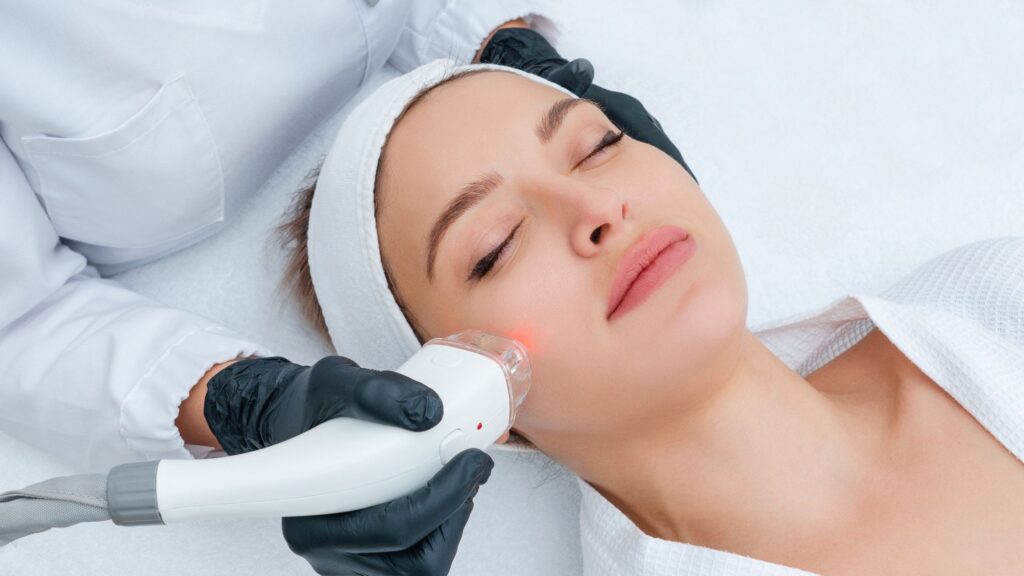
The session itself typically runs between 30 and 45 minutes. A practitioner will apply a cooling ultrasound gel to your face, then glide the Sofwave handpiece across treatment areas. The device actually has a built-in cooling mechanism — it chills the uppermost layer of skin while the ultrasound energy penetrates below. This is what distinguishes it from older energy-based devices; you’re not burning the surface to reach deeper tissue. You’re protecting the surface while working underneath it.
Most patients describe the sensation as a mild warmth or an occasional quick pulse of heat. Some areas are more sensitive than others — the forehead, around the jawline, the temples. But the word “painful” rarely comes up the way it does with older modalities. Numbing cream isn’t always required, though your provider might offer it depending on your comfort level.
Downtime is virtually nonexistent. That’s not just marketing language — it’s clinically consistent. Most people walk out with mild redness that fades within a few hours and head straight back to their regular routine. No bandages, no peeling, no hiding indoors for a week. For anyone managing a busy schedule, that alone is a significant draw.
It’s worth noting that results aren’t immediate. Collagen remodeling is a biological process — it takes time. Most patients see meaningful improvement at the 12-week mark, with the full effect settling in around three to six months post-treatment. That delayed gratification is something worth mentally preparing for, especially if you’re used to fillers or other treatments where you see changes right away.
Who Actually Benefits from Sofwave — and Who Might Not
This is the question that matters most, honestly. Because there’s a certain type of skin concern that Sofwave is genuinely excellent for — and there are situations where it’s not the right fit.
Sofwave tends to work best for people in their late thirties through sixties who are beginning to notice mild to moderate skin laxity. Think: softening jawline definition, early jowling, horizontal neck lines, brow descent, or the general loss of that firm, lifted quality skin has when you’re younger. If you’re catching yourself pulling your face back slightly in the mirror just to see what a little lift would look like — Sofwave is speaking directly to that.
Candidates who tend to see the strongest outcomes include:
- People with mild to moderate skin laxity (not significant sagging)
- Those looking to delay or complement surgical options rather than replace them entirely
- Individuals who’ve had subtle results from injectables and want something that works at the structural level
- People who prefer minimal recovery time and want to maintain a “no-one-needs-to-know” approach to cosmetic care
On the other hand, if you have significant skin laxity — the kind where there’s real excess tissue — Sofwave isn’t going to replicate what a surgical facelift can do. It’s not in the same category. No non-invasive treatment is, and any honest provider will tell you that upfront. The best practitioners aren’t trying to sell you Sofwave as a substitute for surgery; they’re helping you figure out where on the spectrum your concerns fall and what makes sense for where you are right now.
Sofwave works well across various skin tones, which is worth mentioning — some energy-based treatments carry higher risks of pigmentation changes for darker skin types. The cooling technology in Sofwave helps mitigate that concern, though a conversation with your provider about your specific skin tone and history is always the right move.
Sofwave vs. The Competition: How Does It Stack Up?
The non-invasive skin tightening space has gotten genuinely crowded. You’ve probably heard of Ultherapy, Thermage, Morpheus8, or even RF microneedling devices. So where does Sofwave fit in the landscape?
Ultherapy, which has been around since 2009, uses focused ultrasound at deeper tissue levels — sometimes reaching the SMAS layer, the same layer surgeons address during facelifts. That deeper penetration can yield more dramatic results, but it also comes with more discomfort and a longer track record of variable outcomes. Sofwave operates at a shallower but more consistent depth, which is part of why it’s considered more predictable and more comfortable.
Thermage uses radiofrequency energy rather than ultrasound. It’s excellent for skin texture and surface tightening, and it’s been around even longer. Some providers actually combine Thermage with Sofwave for a layered approach — addressing both superficial and mid-dermal concerns in the same session. Whether that makes sense financially and clinically depends entirely on your individual goals.
Morpheus8 and RF microneedling devices take a different route entirely — they create micro-injuries through tiny needles while delivering radiofrequency heat simultaneously. The results can be impressive, particularly for texture and mild laxity, but the downtime is more significant; you’re looking at several days of redness, swelling, and sometimes pinpoint bleeding. For someone who genuinely cannot afford visible downtime, that’s a real consideration.
What Sofwave brings to the table is a combination of reasonable comfort, minimal downtime, consistent depth targeting, and a solid clinical evidence base — published peer-reviewed studies, not just before-and-after photos. For someone who wants a credible, science-backed option that doesn’t require taking a week off work, it occupies a compelling sweet spot.
The Cost Question — Let’s Be Honest About It
Sofwave is not cheap. A single full-face treatment typically runs between $2,000 and $4,500 depending on your location, the provider’s level of expertise, and how much of the face and neck is included. That’s a meaningful investment, and it makes sense to go in with clear expectations.
Most people see good results from a single session and then consider maintenance treatments every one to two years. Some providers recommend two sessions initially for optimal outcomes, particularly for patients with more pronounced laxity. Insurance doesn’t cover it — it’s considered cosmetic — so this is an out-of-pocket decision.
You know what tends to affect outcomes more than anything? Choosing the right provider. Not all practices have equal experience with the device, and the way it’s applied — the amount of passes, the areas prioritized, the settings calibrated to your skin — makes a difference. A board-certified dermatologist or plastic surgeon with demonstrated experience using Sofwave is worth paying a premium for over a med spa with a newer device and less clinical depth.
During consultations — and you should absolutely have at least one before committing — ask to see before-and-after photos of patients with similar skin concerns to yours. Ask how many treatments the provider has performed. Ask what realistic results look like for someone at your starting point. A good provider won’t oversell it; they’ll help you understand exactly what the treatment can and can’t do, which is how you make a decision you won’t regret.
Is Sofwave Worth It?
For the right candidate — someone with mild to moderate skin laxity who wants a clinically validated, non-surgical option with minimal disruption to their life — Sofwave is a genuinely strong choice. It’s not magic. The results are subtle and progressive, which some people love and others find underwhelming if they go in expecting a dramatic transformation.
But here’s what it does offer: real, measurable collagen stimulation backed by peer-reviewed research; a comfortable experience that most people tolerate without significant distress; essentially no downtime; and outcomes that look natural because they are — your own biology doing the work.
The aesthetics industry is full of devices that promise more than they deliver. Sofwave sits in a more honest category: well-designed technology, realistic outcomes, and a growing body of clinical data supporting its use. That’s not a small thing.
If you’re curious, the best next step is a consultation with a qualified provider who can actually look at your skin and give you an honest assessment. Not a brochure. Not a social media ad. A real conversation about your specific concerns and whether Sofwave makes sense for where you are right now.
Because at the end of every skincare decision, that’s still the most reliable tool available — good information, from someone who’s seen the outcomes and isn’t just trying to fill their appointment book.